‘Magnetic Growth Insights’ from 33 SME Property Consultants (4-minute read)
By Alex Harrington-Griffin
Part 4: Make Handshakes Count: The Magnetic Networking Recipe
As a founder or business development lead, your most finite resource is your time.
As property development moves from it’s ‘challenging market phase’ into green shoots of new land deals happening, many would agree the era of “transient” networking is over, especially where everyone has become a little less willing, post-Covid.
We all know that we have to be out there, ‘pressing the flesh’. As Charlotte Moxon of Strutt & Parker notes from my recent book interviews:
“There has been nothing that has been stronger for us than the face-to-face meeting… that build those relationships with developers,
but give them the confidence and trust in our abilities.”
You can no longer afford to spend mornings at generic breakfast huddles hoping for a lucky break on a new commercial refurb or regeneration project.
To make your activity count (which includes travel and other missed opportunity cost), we’re best to filter any activity that requires our time to ‘put yourself out there’ through the lens of your Ideal Client Profile (ICP), as we covered in Part 1.
Why would THEY go to that place? What is the draw for them? And if so, what do they want and expect from me when they are there? What value do I bring, besides my ‘service’.
Consider the location, the host’s reason for being there, and the speakers.
If the host is a high-street bank discussing HMO debt, but your ICP is an established new build resi developer looking for “relief” from planning policy anxiety, you’re probably in the wrong room.
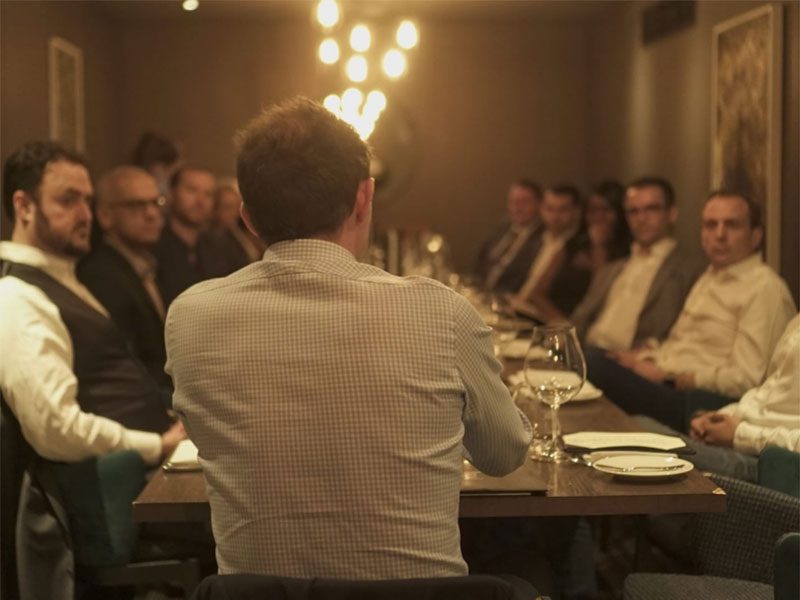
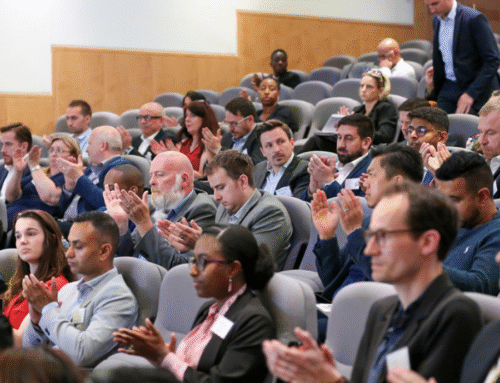
Developers Boardroom with Allsop; 2019
Building Up from the “Standard” Small Talk
I ran Developers Boardroom as a private developer network for 7-years before becoming Inside DB, and saw first hand where new connections and conversations turned into something worthwhile.
Once you’re in the room, the biggest missed opportunity is the generic “so, are you busy at the moment?” question. Bland chat 101. Given the market, you also risk making people feel awkward within the first minute, by having to dress up their pipeline.
To become truly Magnetic, your questions should signal that you understand their true motivations, and how they are likely to feel in that cycle.
Here are three questions designed to open a 5-minute high-value conversation:
1.The Relief Question: “So, what have you found to be most effective for new opportunities in the past few months?” Give them a chance to gloat.
2. The Credibility Slip Flip: “We’ve just finished working on a XYZ project with John Smith Homes, and it was amazing to see when they tried ABC, how much was saved. Have you had many challenges with your…”
3. The USP Pivot: “We’ve seen a lot of developers moving toward [Sector X]; is this something you’ve looked at?”. Talk about your client’s positive results in this space ideally, to give context and credibility.
And if all that fails, don’t forget we are all still people with passions outside of work, so never be afraid to go human-first and chat hobbies! Cooking, football and house & rap music if we meet for me, please.
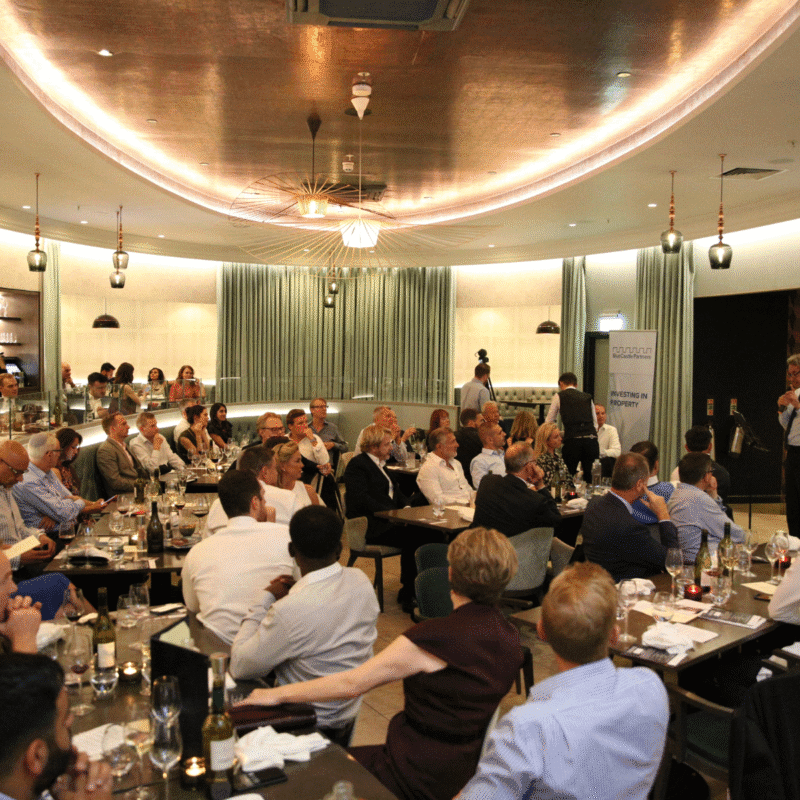
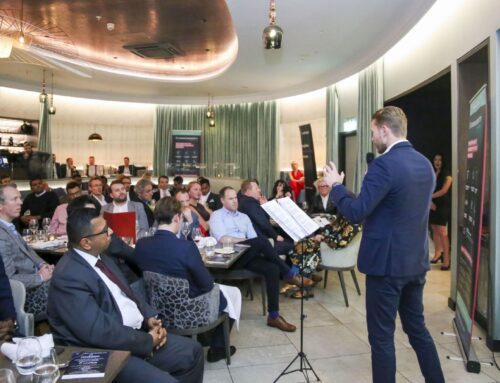
The Dinner I by Developers Boardroom; 2018
The “Anti-Coffee” Follow-Up
The most common mistake I see post-event is moving immediately to “suggesting a coffee or Teams call to show you what we do“. Painful to see/hear. This is a high-expectation request for a “cold” new contact. In the Magnetic Impact programme, I always advocate for a value-led follow-up instead.
Show value upfront, before you show off.
Unless specifically requested, I always suggest NOT to send case studies or project run-downs: these are “convincing” assets for later in the journey. Instead, send what I call a Value Upfront (VU) asset: a short, practical piece of content or information they can use immediately. Ideally something that can be ‘consumed’ in just 2-3 minutes, whether reading, watching, listening or clicking.
This could be a short Linkedin or blog article, a link to a relevant upcoming event, or a “learning-led” PDF from your own practice that solves a common ICP pain point.
As Allan MacMillan of C7 Architects mentions, they use “little books” of project insights to ensure their reputation and valuable is tangible when they leave the room.
Demi Yianni from Projekt QS recently published the helpful 1-page guide: Defending developer capital against 6 major threats of 2026
The Concentrated Sequence to Progress
Effective prospect progression after an initial connection requires a structured, “smart-casual” sequence, my approach of choice Inside DB.
After all, we’re often talking 5, 6 sometimes 7 figure project fees, so having a considered process is key to avoid being a commoditised, lower value professional.
After taking the short, value-led step above, engage with their social content for a few days to maintain that name familiarity, if they are active, or simply connect, or mention them in an event post.
When you finally move to a formal follow-up, lead with curiosity and relevance.
Your message shouldn’t be about punting your services, but about “having an idea for that project they mentioned” or “having a specific introduction they might benefit from”. Naturally, suggest a brief, 10–20 minute phone call to discuss this specific value-add.
And for sanity-sake, please offer a range of times to speak, not just one, or worse, “I’ll give you a call on Tuesday”. Please.
It is only within this call, once you have demonstrated you are the “antidote” to an anxiety, and are value minded, that you advance the relationship to suggesting a coffee or site visit.
So why is this all important?
By treating every activity as the ‘next step in the relationship’, like you would do if dating or choosing a high value investment, leading with value rather than a pitch, you ensure that when potential business is eventually discussed, the trust is already baked in.
Stand out. Build different. Be Magnetic.
Want Magnetic Insights in your inbox or LinkedIn feed? Subscribe here today

Leave A Comment