'Magnetic Growth Insights' from 33 SME Property Consultants (4-minute read)
By Alex Harrington-Griffin

Part 2 – Sell the Hole, Not the Drill: Why Developers Don't Buy 'Services'
There is a famous phrase, often attributed to Harvard marketing professor Theodore Levitt, who famously said:
"People don't want to buy a quarter-inch drill. They want a quarter-inch hole!"
This concept is a foundational principle in marketing and product development, known as "Jobs to be Done". In property, it means that our clients do not buy our services for the features – they invest in the results, outcomes, or emotional satisfaction.
It's these latter focal points that help property professionals avoid the 'race to the bottom' commodity-style pricing battles seen in the past two years, by starting
 to reframe why they are worth the investment that's presented. Or at minimum, encouraging a response to that cold intro or referral email.
I saw it last year in a LinkedIn post by a well-connected agent that drew 350+ introductions, yet almost all focused on what they sell rather than how they help.
As B2B expert April Dunford argues, we must articulate value through a 'customer-frame driven' approach, where your unique strengths, services and experience are presented for their interests first.
In my business, clients don't buy 'growth consultancy' (the drill); they invest in 'winning ideal clients' (the hole).
Turning these unique 'customer-facing' value propositions, or USPs, into catchy jingles and intros is hard, but once you've identified who it is your ideal client, or ICP , has as core pain points and needs (See Part 1), it's much simpler to form a description that connects with your developer, owner or fellow professional.
As part of the Magnetic Property Consultants interviews, contributors shared what they feel makes the different in the eyes of their sector. They weren't squeezed for an 'intro pitch', but rather a description of what they do that is different from their competitors.
Julian Seymour, Managing Director of communications consultancy, Cratus Group, shared:
"We are probably the company which invests most heavily in the local government association conference. So we have parties.
We also held our own dinners and events, which allows us to talk to councillors, and get an understanding and just build a relationship.
Not so that we can get their support because we're friends, but that we can pick up the phone and get an honest answer from them."
This unique position of being able to fund and host gatherings that connect their team and clients with local government, gives Cratus the chance to do
something that either party struggles to do on their own.
Their team of nearly 30 can then facilitate a closer, more real appreciation of the people and policies behind a planning application.
Luke Raistrick, Founder of Centro Planning, doubled down on sharing how their experience helps get the most effective planning application possible for their clients by going the extra mile to reduce the risk of refusal: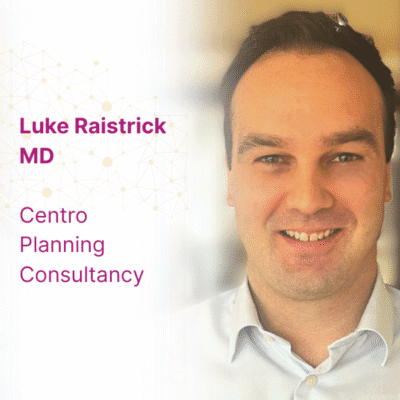
"I've had transport consultants, for example, rewrite whole reports to completely flip the argument that they're making because, I know, looking at it from all my experience, that you've got weaknesses there, and you need to address them.
I think clients notice that, and I know that they see the value that we add in terms of increasing the chances that they're going to get a positive result."
By framing their 200+ applications as 'beyond standard application management,' Centro shifts the conversation from a process to a guaranteed increase in success, prompting the prospective client to ask 'how?'
Adam Honig-Joselyn from building regs compliance specialists Jostec, suggested that their level of proactive expertise, with associated service price points, acts as an investment for their clients, to save money beyond just the survey:
"We've tried to keep our position as not the cheapest in the market, because if things don't go perfectly, which they very rarely do, you save money by having come to us in the first place, because we can fix your problems.
We know of plenty of other companies at the lower end of the pricing scale that can't do that."
With over 5,000 projects under their belt, they have plenty of valid experience to point at and give reference to when proving this capability.
Content expert Ann Handley notes that 'clarity always beats cleverness' – a sentiment echoed by Planning Insight's MD, Peter Higginbottom. For them, a 'plain-speaking' approach creates a virtuous circle that delivers exactly what developers want:
"We recognise that planning can be a complicated field, sometimes even for us as professionals. So in order to assist prospective and existing clients, and to some extent the general public, we work on producing content that is plain speaking, helpful, and can influence decision-making.
Producing stuff that people can relate to, find it easy to read, and is ultimately helpful in, certainly with developers, in growing their business. The more sites they find, the better for them, better for us."
So why is this all important?
Building on the 'client-first' approach introduced in the first article, talking to our target clients with this 'benefit or value of service' reframes what you do, in a way that matters most to the intended audience.
When aligned with the prospects' core need or problem, this messaging becomes much more powerful to differentiate property professionals and consultants in a very competitive space.
Stand out. Do different. Be Magnetic.
Want Magnetic Insights in your inbox or LinkedIn feed? Subscribe here today



Leave A Comment